Cardboard Rebels: How Gen Z Ditched the Screen and Found Their People at the Table
The Screen Fatigue Nobody Wants to Admit
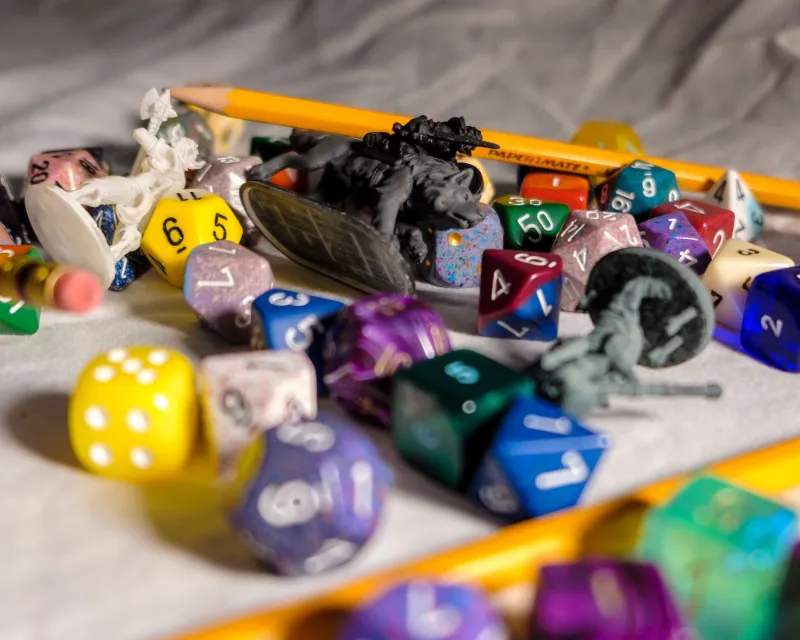
There's a particular kind of exhaustion that comes from staring at a glowing rectangle for eight hours straight. Gen Z knows it better than anyone. They grew up on it — Minecraft at age seven, Fortnite at twelve, TikTok scroll sessions that devour entire evenings. And yet, something weird is happening in basements, college dorm common rooms, and cramped apartment living rooms across the country: people are putting the phones down, cracking open a rulebook, and rolling dice.
Not ironically. Not as a bit. For real.
The analog gaming scene — tabletop RPGs, indie board games, war games, card drafters, the whole sprawling ecosystem — has quietly become one of the most explosive growth sectors in entertainment. Hobby retail sales in the US have surged dramatically since 2020, and the Dungeons & Dragons brand alone reported a 33% spike in new players during the pandemic years. But the numbers only tell part of the story. The culture underneath those numbers is where things get genuinely fascinating.
D&D Didn't Just Come Back — It Got Weird (In the Best Way)
Let's be honest: Dungeons & Dragons spent a few decades as the punchline of a joke that wasn't even that funny. Then Critical Role happened. Then Stranger Things happened. Then a generation of kids who grew up watching those things turned eighteen and went looking for a table.
What they found wasn't your older brother's dungeon crawl. The D&D revival that Gen Z inherited and immediately started reshaping looks radically different from the game's earlier cultural incarnations. Character creation has become its own art form — players spend hours on backstory, voice, aesthetic. Actual Play podcasts like The Adventure Zone turned long-form storytelling into a legitimate audio genre. Indie publishers like Mörk Borg, with its death-metal-album visual design, or Mothership, a sci-fi horror RPG with a zine-style rulebook, proved that you don't need Wizards of the Coast's budget to build a devoted following.
These indie designers are the underground architects of the current moment. Operating through crowdfunding platforms like Kickstarter and Backerkit, designers like Luke Gearing, Sean McCoy, and dozens of others have built cult followings that rival mid-tier mainstream publishers. Their games circulate through Discord servers, Reddit threads, and local game store shelves in college towns from Austin to Portland to Pittsburgh.
Why the Table Hits Different
Ask anyone who's recently gotten deep into tabletop gaming why they prefer it to video games and you'll hear variations of the same answer: it's about the people.
That sounds simple. It's actually kind of profound when you sit with it.
Digital gaming, for all its social features, still mediates human interaction through a screen and a server. The table removes that mediation entirely. You're reading facial expressions. You're laughing at something that happened in the room, not in a chat log. You're sharing snacks and arguing about rules and building an inside joke that only exists for the six people who were there that night.
For a generation that grew up hyperconnected but frequently reports feeling deeply lonely, that kind of unmediated social experience isn't just fun — it feels almost radical.
"It's the only time during the week where I'm not performing for an audience or optimizing something," one 22-year-old player at a Chicago game store told us. "We're just... playing. It's stupid and great."
The Indie Designers Disrupting Everything
The mainstream board game industry — your Catan, your Ticket to Ride, your Exploding Kittens — is enormous and established. But the underground layer beneath it is where the genuinely adventurous design work is happening.
Small studios and solo designers are creating games that tackle subjects mainstream publishers won't touch: grief, queerness, labor politics, the actual texture of working-class American life. Games like Wanderhome, a pastoral RPG about animal folk on a journey, or Ironsworn, a free-to-download solo RPG with a devoted modding community, represent a design philosophy that prioritizes emotional resonance over commercial polish.
The distribution networks for these games are equally underground. Small-batch print runs sell out through creator newsletters. Limited edition zines get traded at conventions like Metatopia and Dreamation in New Jersey, or at local indie game fairs that have popped up in cities across the Midwest and South. There's a whole parallel economy operating outside the big-box retail pipeline, and Gen Z players are fluent in navigating it.
Local Game Stores as Cultural Anchors
One underreported piece of this story is the local game store renaissance. After years of decline pressure from online retail, many LGSs (local game stores, in the hobby vernacular) have repositioned themselves as community hubs rather than just retail spaces. Weekly game nights, RPG open tables, painting workshops for miniature wargames — stores that leaned into the community-space angle have found Gen Z customers who are hungry for exactly that kind of third place.
In cities like Nashville, Denver, and Philadelphia, certain game stores have become genuine cultural institutions — places where friend groups form, where people meet partners, where somebody's first awkward attempt at running a D&D session turns into a years-long campaign.
That's not retail. That's something closer to a community center with better lighting and a really good selection of dice.
The Vault Take
Analog gaming's resurgence isn't nostalgia tourism. It's not Gen Z being contrarian for the sake of it. What's happening at tables across the country is a genuine cultural recalibration — a generation figuring out that some experiences are worth the friction of being in the same room as another human being.
The underground designers, the indie publishers, the local stores hosting Tuesday night campaigns — they're building something that algorithms can't replicate and platforms can't monetize into oblivion. That's exactly the kind of scene SV66 Vault exists to document.
The dice are on the table. The question is whether you're at it.